Analyst: Game console shipments expected to decline 19.5% to 33.9m units in 2026
Global home console shipments will contract 19.5 percent to 33.9 million units in 2026, according to S&P Global Market Intelligence Kagan's July forecast.
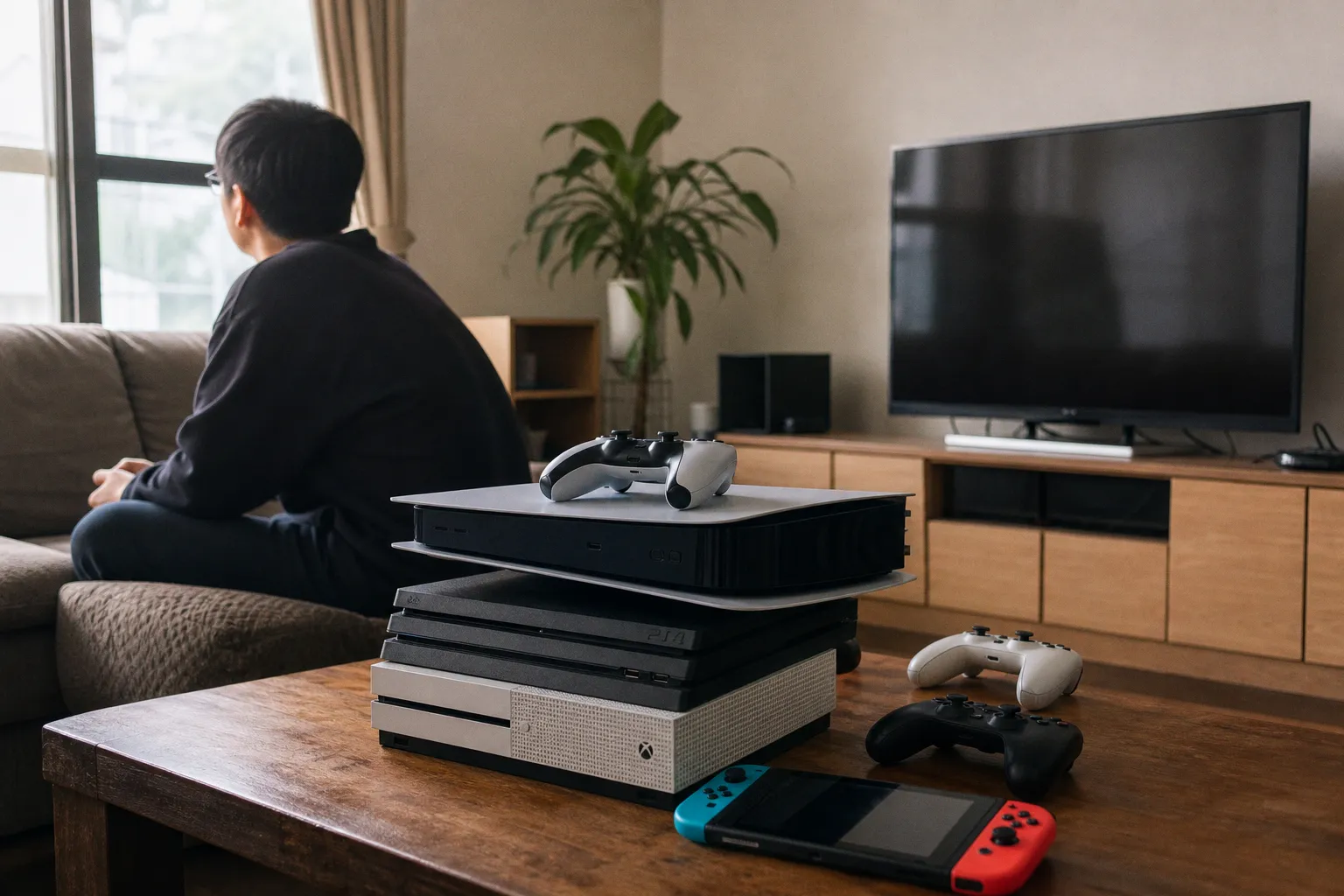
The pricing wall
S&P attributes the decline to an ongoing RAM and storage crisis that has forced manufacturers into unprecedented late-generation price hikes instead of cuts. Sony raised every PS5 model in April 2026 — the base unit moved from $550 to $650, the digital edition from $500 to $600, and the Pro from $750 to $900. Nintendo's Switch 2 carries a $50 premium over its launch tag. Xbox Series X now sits $100 above a standard PS5.
These are not impulse-buy price points. Analyst Neil Barbour describes the bind bluntly: consumers face hardware that is "either too old or too expensive for the median buyer," paired with a thin software slate outside a handful of tentpole releases. S&P projects shipments will slide further to roughly 27.1 million units in 2027 before any recovery begins.
For Web3 studios, the friction is instructive. Every dollar of hardware cost is a barrier to onboarding. Browser-first and mobile-first architectures that avoid the console tax entirely hold a structural advantage in user-acquisition cost per active wallet — provided the on-chain loop itself is not burdening users with gas fees and seed-phrase confusion.
Platform trajectories diverge
Nintendo still leads the pack. S&P forecasts 17.1 million Switch 2 units in 2026, roughly in line with the original Switch's second-year pace. Nintendo's own projection is slightly lower at 16.5 million, citing a 16.9 percent year-on-year decline. The company has no major software tentpole until Pokémon Wind and Waves ships in late 2027.
Sony's PS5 shipped 17.1 million units in 2025, already a 15.2 percent year-on-year decrease. S&P expects that figure to fall to 13.2 million in 2026. Barbour questions whether even Grand Theft Auto 6 can offset sticker shock on a six-year-old device, noting the gap between PS5 and PS4 cumulative sales is already negative and widening.
Xbox is in steeper decline. Microsoft moved 3.2 million Series X|S units in 2025 — the lowest annual total on record. Quarterly shipments dropped below 500,000 for the first time in Q1 2026. S&P models 2.5 million for 2026, then a rapid wind-down toward zero. Barbour attributes this to an uneven first-party library and a subscription-first strategy that failed to lift hardware sales.
What Web3 builders should watch
S&P projects a gradual recovery to 37.4 million units by 2030, predicated on component costs easing enough for Sony and Microsoft to launch next-generation hardware in the $600-to-$800 range. A PlayStation 6 is modeled for 2028, contributing 4 million units in its first year and scaling to 17.2 million by 2030.
The near-term picture, though, is a console market in active contraction with a software pipeline thin outside a few major releases. That creates an opening — but not a guarantee. Lightweight clients, browser-based wallets, and mobile-first token loops do not depend on a $650 box attached to a television. The throughput bottleneck for Web3 onboarding has always been user friction; hardware cost is now compounding that friction for the incumbents.
The real question is whether Web3 studios can convert the window before next-gen hardware arrives. Console scarcity does not automatically redirect users to blockchain games. It redirects them to whatever requires the least setup. If that happens to be a browser wallet and a playable build, the timing works. If it is a Netflix queue, the structural advantage means nothing.