RTX 60 Delayed to 2028: Nvidia's Gaming GPUs Are No Longer the Priority
Nvidia will not ship a new gaming GPU architecture in calendar year 2026, ending a release cadence stretching back to the mid-1990s.
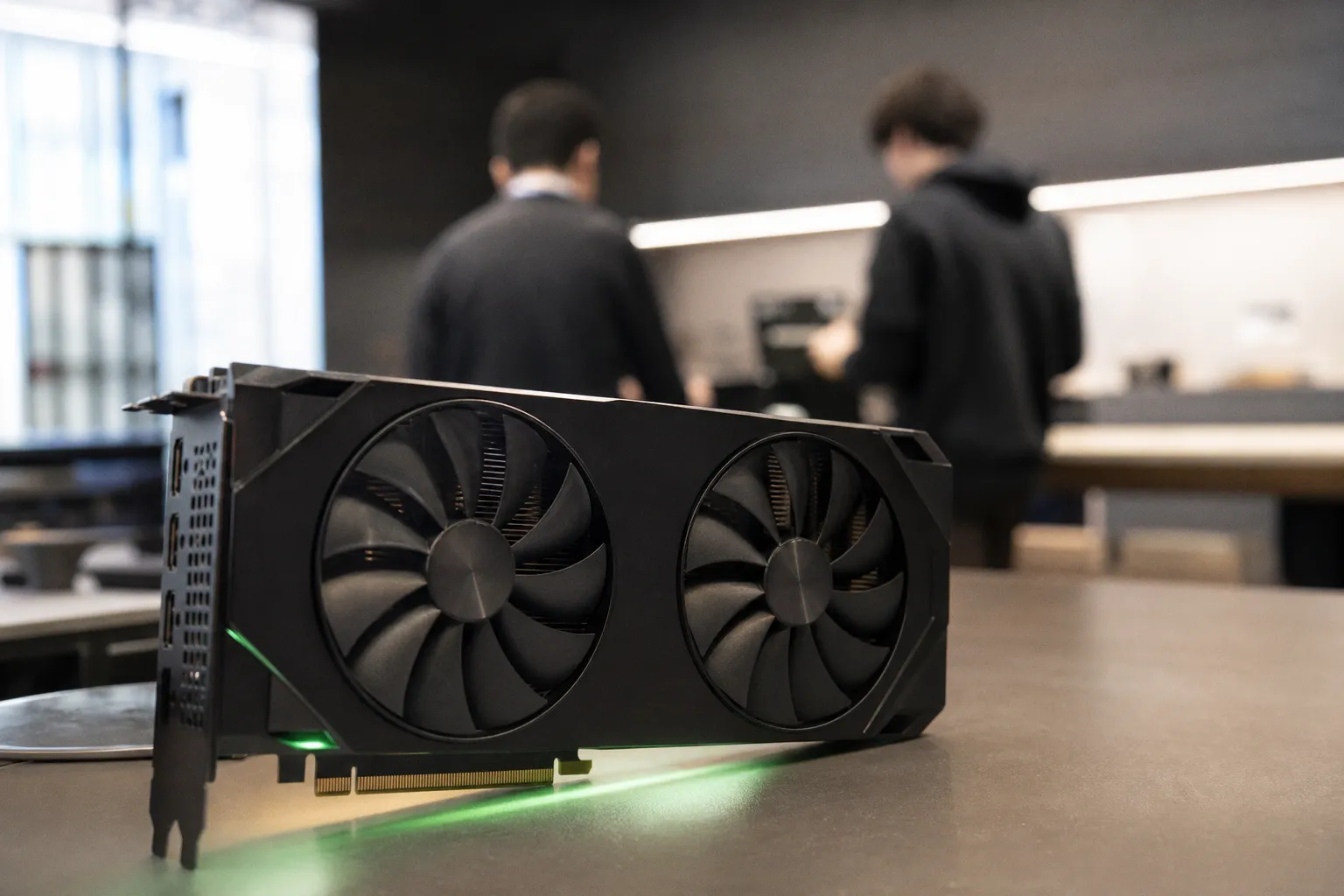
Allocation Logic Over Engineering Roadmap
The Constraint Is Bandwidth, Not Transistors
The mechanism is straightforward. Every gigabyte of GDDR7 or HBM routed into a GeForce SKU is a gigabyte that cannot go into a Blackwell or Vera Rubin part selling to data center buyers at five to ten times the unit price. When memory is the binding constraint rather than fab capacity for the logic die, the highest-margin product wins the allocation fight by default — no executive decision required.
The revenue mix confirms the gravity of the shift. Gaming GPUs, which once defined Nvidia's identity, now sit at roughly 7.5–8% of total company revenue, a fraction that has compressed even as absolute gaming dollars held relatively flat, simply because AI infrastructure revenue exploded around them. No marketing narrative is required to explain why a sub-10% division loses the allocation war against the segment absorbing the rest.
Reporting on the gap was first surfaced via The Information in early 2026 and corroborated by PCWorld, TrendForce, and PC Gamer. Nvidia has not publicly addressed the 2026 gaming GPU void directly and continues to sell existing RTX 50-series inventory, but it has also not denied the pattern. AIB partners and retailers, per these accounts, have been signaling shrinking gaming allocation while data center shipments accelerate for months.
What This Means for Web3 Gaming Infrastructure
For token-play's audience, the immediate question is hardware friction on the compute layers beneath actual gameplay. Cloud rendering pipelines used by browser-based metaverses and AAA-cryptogame frontends run on consumer-class Ada/Blackwell-class cards. If those SKUs see allocation tightened further, expect rental pricing from GPU cloud providers (Vast, RunPod, Lambda's consumer tier) to drift upward and capacity to remain constrained, particularly on 16GB+ cards capable of handling heavier texture streaming for next-gen asset densities.
Validators, sequencers, and zero-knowledge prover farms running consumer GPU rigs face a subtler exposure. The bottleneck on GDDR7 hits any workflow that depends on high-bandwidth memory rather than raw VRAM alone — including proof generation for on-chain game state transitions and certain light-client setups. Builders who planned for fresher GeForce hardware in 2026 capex should recheck the memory tier of their provider contracts.
Finally, the used GPU market becomes a more relevant procurement channel than at any point in the last decade. RTX 4090 and 4080 pricing, which had begun normalizing, will likely see renewed upward pressure as builders and small studios who cannot wait for 2028 compete for last-generation stock.
What to Track
Watch TrendForce and DRAMeXchange for quarterly HBM supply commentary — memory availability is the leading indicator, not Nvidia's GPU roadmap. Monitor Q3 fiscal Nvidia earnings for any change in gaming revenue mix or allocation language. And observe whether AMD's RDNA 5 timeline (now confirmed for later in 2026) holds; if AMD retains its cadence, the competitive center of gravity in consumer GPU shifts regardless of what Nvidia ships.