Rent Web3 Weapon Skins Safely on LootRush Marketplace
The practical problem with renting a Web3 weapon skin is not cosmetic. It is custody.
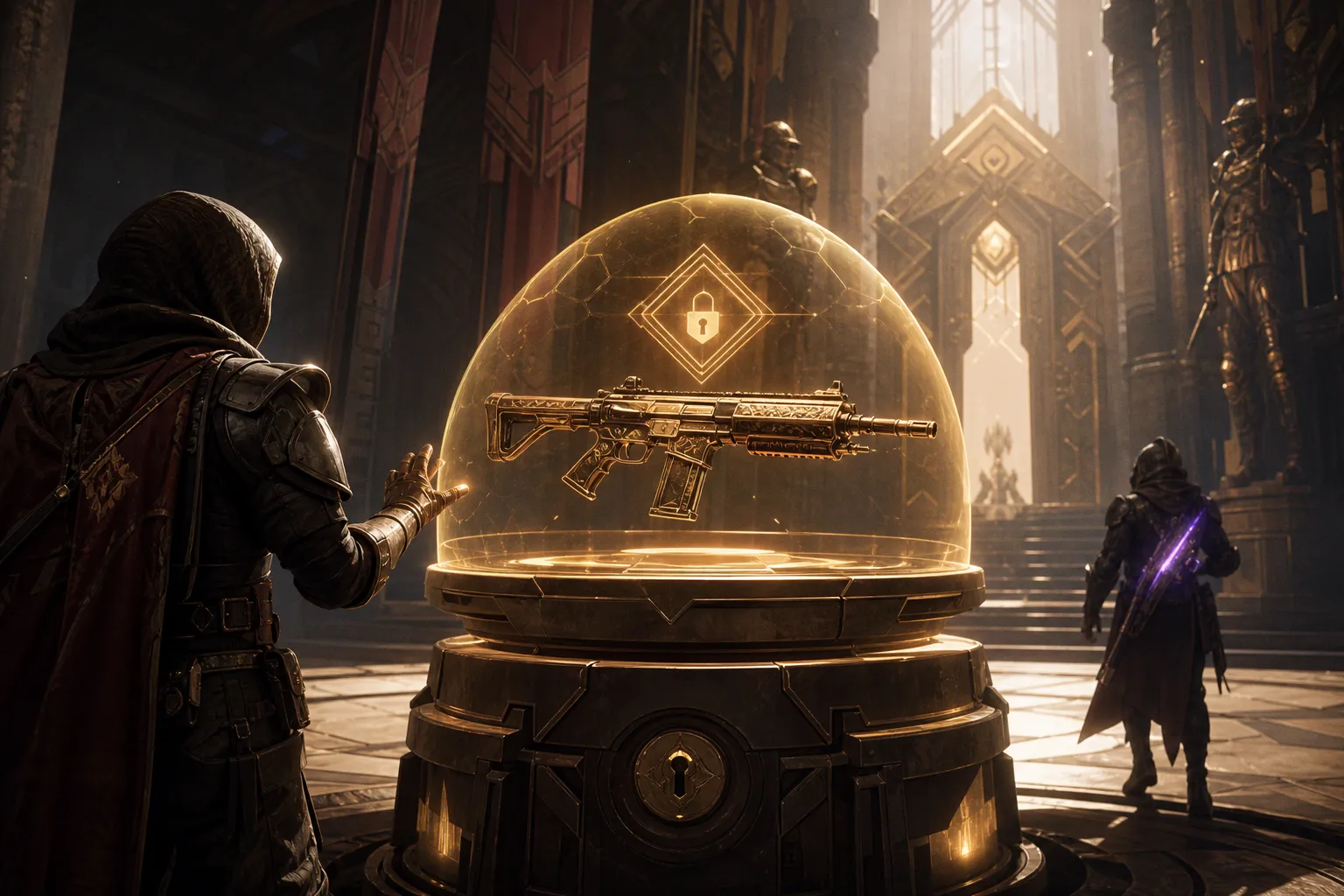
That is why the question many players now type in various forms — how to check rent web3 weapon skins safely on LootRush marketplace — is less awkward than it sounds. It gets to the core of the matter. A rental marketplace for in-game NFTs is not judged only by inventory depth or the cheapest daily rate. It is judged by whether its structure prevents a borrower from becoming an accidental owner, a thief, or a security risk.
LootRush, launched in 2022, has positioned itself around this custody problem. Its model uses smart contract escrow, platform-managed access, and direct game integrations so that a renter can use a supported asset without receiving the ability to sell or transfer the underlying NFT. That distinction is not a technical footnote. It is the line between a rental economy and an unsecured peer-to-peer promise.
The mechanics of smart contract escrow in NFT rentals
A conventional rental transaction in older digital economies often depended on social enforcement. One player lent an account, a guild item, a rare skin, or a marketplace asset to another player and hoped the item came back. Web3 assets complicate that arrangement because ownership is usually tied to wallet control. If the NFT moves into a renter’s wallet with full transfer rights, the lender has not merely “lent” the asset; they have surrendered practical control.
LootRush changes that sequence by keeping the NFT in a smart contract-based escrow structure. The lender retains ownership while the renter receives temporary in-game access. The asset is held in the platform’s smart contract vault rather than being transferred to a renter’s personal wallet with unrestricted permissions.
In plain terms, the renter is not given the keys to the vault. They are given a time-limited right to use what is inside it, where supported by the game and marketplace integration.
The safest rental is not the one where everyone promises to behave. It is the one where the transaction design makes misbehavior difficult.
This matters especially for weapon skins because they sit at a peculiar intersection of utility and identity. A high-value skin may not improve gameplay performance in a strict mechanical sense, depending on the title, but it can signal tenure, spending power, faction belonging, tournament history, or collector taste. In a Web3 environment, that signal becomes tradable. Once it becomes tradable, theft and misuse become part of the economic design problem.
A proper escrow-based rental flow should let a player answer several questions before committing:
1. Where does the NFT sit during the rental period?
On LootRush, the asset remains in a smart contract vault rather than being fully transferred to the renter with sale or withdrawal permissions.
2. What rights does the renter actually receive?
The renter gains temporary in-game access, not unrestricted control over the token.
3. Can the renter sell, transfer, or pledge the NFT elsewhere?
The platform design prevents the renter from selling or transferring the underlying NFT while it remains in escrow.
4. How does the asset return happen?
Rental terms are governed by smart contracts, with automated return protocols rather than a manual “please send it back” arrangement.
5. Does the supported game recognize the rental access cleanly?
LootRush integrates directly with supported games, reducing the need for risky wallet workarounds.
The governance implication is straightforward: escrow moves enforcement from social trust to protocol rules. That does not make a platform immune to every possible vulnerability — no serious observer should claim that — but it narrows one of the most common failure points in player-to-player asset lending.
How LootRush reduces peer-to-peer transfer risk
The riskiest version of NFT rental is the informal one: a Discord negotiation, a direct wallet transfer, and a promise that the asset will be returned after a match, tournament, or campaign. Such arrangements are not new in gaming culture. Players have always lent accounts, items, and characters. What Web3 changes is the finality and liquidity of the asset once transferred.
A weapon skin NFT can move quickly across wallets and marketplaces. If a renter receives full control, the lender may have little recourse beyond social pressure, platform complaints, or legal claims that are rarely practical for small-value disputes. Even when the renter acts honestly, direct transfers create operational risk: wrong addresses, phishing prompts, malicious approvals, wallet-draining signatures, and confusion over chain selection.
LootRush’s rental structure is designed to avoid that direct transfer layer. Because the renter does not take possession of the NFT in a way that allows sale or transfer, the familiar “will they return it?” question becomes less central. The better question becomes whether the platform’s escrow and integration design functions as intended.
| Risk point | Informal peer-to-peer rental | LootRush-style escrow rental |
|---|---|---|
| Asset custody | Often moves to renter’s wallet | Held in smart contract escrow or platform vault |
| Renter transfer ability | May be possible if full ownership is transferred | Renter cannot sell or transfer the underlying NFT |
| Return process | Depends on renter action and trust | Governed by smart contract rental terms and automated return protocols |
| Wallet exposure | May require direct wallet interactions with unknown parties | Uses platform flow and supported integrations |
| Dispute surface | Social, off-platform, difficult to enforce | Reduced by pre-defined rental mechanics |
The platform’s stated security advantage is not that all risk disappears. Smart contracts can have bugs, platforms can face operational failures, and integrations can change when games update their own systems. The narrower and more defensible claim is that the renter is not put in a position to steal the asset simply by refusing to return it.
That design choice has social consequences. It allows lenders to put idle assets into circulation without treating every renter as a counterparty risk. It also lets renters test expensive skins, characters, or other in-game NFTs without committing capital upfront. In emerging game economies, where asset prices can outrun actual player income, rental access can become a form of temporary class mobility: a way to participate in higher-status or higher-utility layers of a game without permanent ownership.
Yet this also introduces a familiar tension. If too much prestige is rentable, ownership may become less about identity and more about yield. A skin that once marked a player’s long-term presence in a community can become a rotating costume in a marketplace. That does not make rentals harmful by default. It does mean game studios and marketplace operators are shaping social meaning, not merely processing transactions.
Checking a weapon skin before renting
A safe rental decision begins before the transaction. The first layer is not the price. It is asset legitimacy and game compatibility. Weapon skin collections can change as games update their supported inventories, licensing arrangements, and blockchain integrations. The exact list of LootRush-supported skins is not static, so players should treat the live marketplace and game integration status as the source of truth at the time of rental.
A grounded pre-rental review should look less like speculative investing and more like operational hygiene:
- Confirm that the skin is supported in the game you intend to play.
A listed NFT has little rental value to you if the current game client does not recognize temporary access or if the item belongs to a different title, season, or collection.
- Read the rental duration and return timing carefully.
Automated return protocols are only useful if the timing matches your actual use case. A three-hour rental for a tournament night is different from a weekend rental for progression or social play.
- Check what the rental grants inside the game.
Some weapon skins are purely visual. Others may be tied to broader item systems, access rules, or progression economies. Do not assume performance benefits unless the game itself defines them.
- Look at chain and wallet requirements.
LootRush supports multiple blockchain networks, including Ethereum, Polygon, and Ronin. Chain context affects fees, settlement behavior, and the surrounding marketplace culture.
- Avoid off-platform side agreements.
If the safe rental design depends on escrow, stepping outside that flow reintroduces the risks escrow was meant to remove.
- Separate rental value from resale fantasy.
Renting a skin does not guarantee a return on investment, improved match outcomes, or future marketplace appreciation. It is a temporary access purchase, not a yield product by default.
This is also where the phrase how to check rent web3 weapon skins safely on LootRush marketplace web3 becomes useful as an intent rather than a slogan. The player is trying to verify three things at once: the asset, the platform mechanism, and the game-side access. All three have to work together.
In Web3 games, ownership is visible. So are mistakes. A bad approval or an off-platform transfer can become part of the asset’s history faster than a support ticket can be written.
For players who move between mobile game clients, wallet apps, and marketplace interfaces, the wider device environment also matters. Coverage of mobile apps and connectivity on sites such as MobNews is a reminder that these transactions often happen on ordinary phones, under ordinary network conditions, not in a perfectly controlled desktop setup.
Wallet security and platform integration
One of LootRush’s more consequential design claims is that users do not need to manually import private keys or connect personal wallets containing high-value assets to a game client in order to use supported rented assets. That point deserves attention because wallet behavior remains one of the weakest social layers in Web3 gaming.
Many players understand the abstract advice: do not share seed phrases, do not sign unknown transactions, do not connect a main wallet everywhere. But actual game behavior often happens under time pressure. A match is starting. A guildmate sends a link. A tournament window is closing. A new client build asks for a connection. In that environment, even experienced users can approve more than they intended.
LootRush’s use of custodial wallets and verified asset integration shifts part of that burden away from the player. The renter uses the platform’s built-in flow rather than assembling a chain of manual wallet imports, token approvals, and game-client connections. For high-value skins, that matters because the damage from one careless approval can exceed the cost of many rentals.
The distinction can be summarized this way:
| Security layer | What the player should want | Why it matters |
|---|---|---|
| Custody | NFT remains outside renter transfer control | Prevents asset theft by renter during rental |
| Access | Temporary game use, not full token control | Matches the social meaning of renting |
| Wallet exposure | Minimal need to connect high-value personal wallets | Reduces phishing and approval risk |
| Integration | Supported game recognizes access directly | Avoids workaround behavior |
| Return | Automated at end of rental term | Reduces disputes and manual failure |
This is not an argument for blind trust in any marketplace. Smart contract-based systems should still be treated as infrastructure with assumptions. Audit status, upgrade controls, platform custody policies, and incident history all matter, even when a user cannot easily evaluate every contract. The available research does not establish the specific audit reports for the most recent LootRush platform updates, so a careful reader should not treat the word “smart contract” as a synonym for absolute safety.
Still, in comparative terms, a structured escrow marketplace is materially different from a direct wallet-to-wallet lending arrangement. It encodes boundaries. The renter can use; the lender retains ownership; the platform mediates the return. That is governance by design rather than governance by after-the-fact moderation.
Rent-to-own and the politics of gradual ownership
LootRush also supports rent-to-own models for certain assets, allowing users to build equity in an NFT through rental payments. In traditional consumer markets, rent-to-own often carries controversy because the total cost can exceed outright purchase. In Web3 gaming, the model has an additional layer: it changes how players enter asset-owning classes inside virtual economies.
For expensive weapon skins, characters, or other scarce items, rent-to-own may appeal to players who cannot or do not want to pay the full purchase price immediately. Instead of a binary choice — remain outside the ownership layer or buy outright — they get a staged path. That can broaden participation, particularly in games where asset ownership is closely tied to status, guild membership, or earning mechanics.
But staged ownership should be examined with clear eyes. A rent-to-own structure is not automatically fair because it sounds more accessible. Players should compare the cumulative rental cost, the time horizon, and the possibility that their interest in the game may fade before ownership is complete. Game economies are volatile social systems. A weapon skin can lose relevance after a balance patch, a season reset, a licensing change, or a migration to another chain.
A practical comparison may look like this:
| Question | Standard rental | Rent-to-own |
|---|---|---|
| Main purpose | Temporary use of a skin | Gradual path toward ownership |
| Capital commitment | Lower upfront cost | Repeated payments over time |
| Best fit | Testing, events, short-term play | Long-term commitment to a game or asset |
| Main risk | Paying for access you underuse | Overpaying if the game or asset loses relevance |
| Ownership outcome | No ownership at term end | Possible ownership if terms are completed |
The social effect is subtle. Rent-to-own can make ownership feel earned through participation rather than purchased in a single market act. That may strengthen attachment to an asset and to the game community around it. At the same time, it can normalize continuous payment as the route to digital identity. A player’s weapon skin becomes not just an object of play, but a small financial schedule attached to their avatar.
That is not inherently exploitative. It is, however, a governance choice. Marketplaces and game developers decide which assets are eligible, how payments accumulate, and whether the resulting economy favors long-term players or simply extracts more from aspirational ones.
Managing rental duration and automated returns
Rental duration is where the economics become concrete. A player who rents a weapon skin for a single evening has a different risk profile from someone using the asset across a season. Short rentals favor experimentation and event-based play. Longer rentals begin to resemble subscription access to identity and utility.
LootRush’s automated return protocols reduce the need for manual coordination at the end of the term. This is important because return friction is one of the quiet killers of rental markets. If lenders must chase renters, and renters must remember return procedures, the system remains socially expensive even when the asset itself is digital. Automation makes the rental relationship less personal, but also less fragile.
Players should match duration to actual behavior rather than imagined ambition. The most common waste in game asset rental is not dramatic theft; it is overestimating how much one will play. A skin rented for a week but used for two sessions may still be secure, but it is economically inefficient. Conversely, a rental that expires mid-event can create its own form of frustration, especially where the item carries team or guild expectations.
A disciplined approach looks like this:
1. Define the use window before browsing inventory.
Decide whether the skin is for a ranked session, a tournament, content creation, guild participation, or simple trial use.
2. Select duration after checking event timing.
Do not rent for a calendar block that fails to cover the actual match schedule or game maintenance windows.
3. Confirm that automated return timing is acceptable.
The asset should return cleanly at term end, but the player needs to know when access will stop.
4. Avoid stacking rentals across games without tracking them.
Multi-game Web3 players can easily lose track of small recurring access costs.
5. Review rent-to-own terms separately from standard rental terms.
Equity-building arrangements should be treated as a purchase path, not merely a longer rental.
For lenders, automated returns support a more liquid inventory strategy. Idle skins can circulate without constant supervision. For renters, the same automation imposes discipline: access ends when the term ends. The platform’s code becomes the boundary of the social agreement.
The wider marketplace signal
The rise of weapon skin rentals says something about the maturation of Web3 gaming. Early NFT game markets often treated ownership itself as the main event. Buy the asset, hold the asset, trade the asset. Rentals suggest a more layered economy, where access, identity, and ownership can be separated.
That separation is familiar in the broader digital world. We subscribe to software, stream media, lease cloud resources, and rent server capacity. What makes in-game NFTs different is the public ownership layer and the emotional proximity of the asset to play. A weapon skin is not only a database permission. It can become part of a player’s presentation, social memory, and tactical routine.
LootRush’s model, with smart contract-governed rentals and escrow-based custody, reflects a specific answer to a persistent question: can player-owned assets circulate without exposing owners to unacceptable counterparty risk? The answer appears to be yes within a constrained design — supported games, escrowed NFTs, controlled renter permissions, and automated returns.
But sustainability will depend on more than the absence of theft by renters. It will depend on whether rental markets add liquidity without hollowing out the meaning of ownership; whether rent-to-own gives players a viable path rather than a slow overpayment; whether game studios maintain stable integrations; and whether players understand that secure access is not the same as guaranteed value.
For now, the safest way to rent Web3 weapon skins on LootRush is to treat the platform not as a shortcut around risk, but as a structure that relocates and limits specific risks. Escrow protects custody. Integration reduces wallet exposure. Automated returns reduce disputes. None of these features remove the need for judgment.
The open question is whether rental economies will make virtual worlds more participatory, or simply more financialized. Weapon skins are a narrow asset class, but they reveal the larger bargain of Web3 gaming: ownership can be programmable, access can be temporary, and identity can be rented by the hour.