New NFT games: upcoming releases and what they mean for digital asset value
The entry cost for new NFT games is often presented as a mint price, a starter pack, or the time needed to clear an onboarding quest. In practice, the real cost is attention.
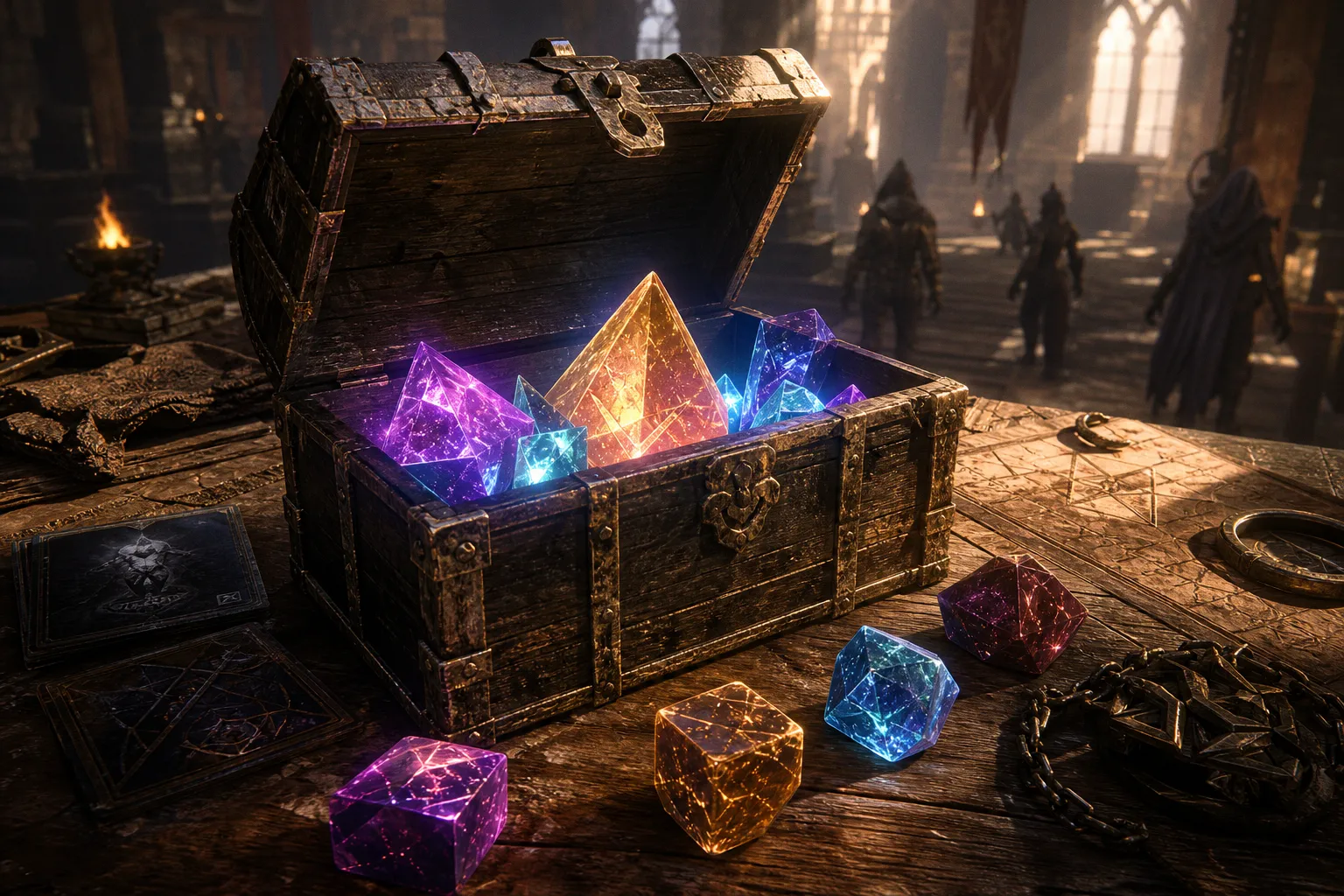
A player has to learn a new gameplay loop, fund a wallet, work out which items are actually usable, and decide whether a roadmap promise is worth another evening of grind.
That is the useful way to approach the 2026 pipeline. There are new crypto games releases with genuine attempts to put NFTs inside familiar systems—card packs, crafting, equipment, progression—not simply beside them in a marketplace tab. But an announced beta, a token airdrop, or a flashy latest NFT mint in gaming does not turn a collectible into a durable asset. I have seen too many inventories become museum wings for games nobody was still playing.
The question is not “will this NFT go up?” It is much more player-shaped: what can I do with it on day one, what keeps it relevant after the launch event, and what happens if the game’s economy gets less crowded?
The 2026 pipeline: where the NFT actually enters the gameplay loop
The upcoming blockchain games worth watching are moving in two fairly distinct directions. One treats NFTs as tradeable containers around familiar loot systems. The other puts minting directly inside the client, making the on-chain step part of the normal player journey rather than a separate crypto ritual.
EXE ARENA belongs broadly to the first camp. The game has announced a closed beta for mid-to-late July 2026 and still lists its official release for 2026, without a tighter public date. Its stated model is easy enough to understand from a player’s perspective: cards pulled from opened packs can be minted as NFTs, while unopened packs may themselves be held or traded as NFT assets.
That distinction matters more than it first appears. An unopened pack is a sealed chance at gameplay content; a minted card is a known game piece. They serve different player instincts:
| Asset type | What the player holds | Main appeal | Main trade-off |
|---|---|---|---|
| Unopened NFT pack | A sealed pack with unknown contents | Speculation, collecting, optionality | No certainty about gameplay usefulness |
| Minted NFT card | A visible card with known traits | Deckbuilding, trading, immediate utility | Value depends on balance, meta and player demand |
| Off-chain starter item | An account-bound early-game item | Low-friction onboarding | Usually cannot be traded outside the game |
For a card game, the healthy version of this system is not one where every card is a “blue-chip collectible.” It is one where cards create decisions. Can I build a viable deck without buying the rarest pieces? Does an unusual card open a different tactical line? Is trading a shortcut around grind, or does it become the whole game?
I would not judge EXE ARENA from a pack image or a rarity chart. I would wait for the beta and play the unglamorous parts: the match flow, the deckbuilding friction, the rate at which a new player earns useful cards, and whether the game has enough tactical texture after the novelty wears off. Those are the mechanics that make a card worth keeping, not a mint badge.
ELHEXA is taking a more integrated route. Its roadmap places “Card NFT — Mint Your Card,” a crafter-and-equipment system, and an Archon NFT announcement in the third quarter of 2026. It also sets August 31, 2026 as a target for “Epic Battle: Nerissa, Queen of the Abyss.” The stated design choice is notable: ELHEXA says all of its NFTs are minted inside the game client.
That can make onboarding considerably less painful. A player who gets an item through a quest, understands why it matters, and chooses to mint it from the inventory is in a much better place than someone sent to a marketplace before they have fought a single battle. The wallet should support the gameplay loop, not stand at the entrance wearing a bouncer’s jacket.
Immutable’s Mintory launch, announced on February 11, 2026, points to a third route: a wider platform funnel. Ragnarok Sharing Hero NFT was named as its first onboarded title, with NFT drops, token airdrops, leaderboard quests, and launch events planned through Immutable Play. This is potentially useful for discovery, especially for players who do not want to chase separate Discord announcements across five projects. It also creates a familiar risk: platform quests can produce a short, highly motivated crowd that is more interested in completing a campaign than staying for the game.
The best onboarding is when a player reaches the mint screen because the item has already earned a place in their build.
A launch event is not an economy
The most persistent mistake around web3 games launching is to confuse activity with staying power. A mint can fill quickly. A leaderboard can light up. Marketplace volume can jump as players scramble for early assets. None of those things tells us whether the game will have a functioning player economy a month later.
A February 2026 empirical preprint examining blockchain data from 12 NFT games found that promotional events increased trading and NFT prices in some cases, but the effect did not persist. It also reported negative average profit for traders in nine of the 12 games studied. That is not a universal forecast for every new game, and the research is a preprint rather than a final verdict. Still, it matches the pattern most active players recognise: launch week brings attention; retention decides what remains.
The first few days of a mint are particularly noisy because several groups are colliding in the same market:
1. Players buying utility want a card, skin, weapon or character that helps them participate now. Their demand is usually constrained by what the item actually does in-game.
2. Collectors care about art, series completion, provenance and limited supply. They may remain interested even if an item is not top-tier in the meta, but they are rarely an endless source of demand.
3. Traders are looking for the launch-day spread—momentum, scarcity and attention. They can add liquidity fast, then vanish just as fast.
4. Quest participants may receive items through leaderboard campaigns, drops or airdrops. Some will become regular players; others will sell as soon as withdrawal is possible.
5. The studio itself controls supply policy, rewards, future expansions and balance changes. That is the part many asset buyers forget, even though it shapes the economy more than a mint countdown ever can.
A game needs all of these groups in some proportion, but it cannot survive on the third and fourth alone. If every conversation centres on floor price and nobody is debating a build, a map, or a card interaction, the game has an economy-shaped object rather than an economy.
This is where conventional gaming gear still matters, too. A competitive mobile player is not thinking about token charts while their device stutters during a decisive round; the practical lessons in a BGMI player’s account of choosing a gaming phone apply more broadly than the genre suggests. Friction kills retention, whether it comes from weak hardware, wallet pop-ups, or a marketplace that takes longer to load than a match queue.
For players considering new NFT games, I use a plain test: remove the resale tab mentally. Is there still a game I would install? Would I still want the item if transferring it were temporarily disabled? If the answer is no, the “utility” is probably just a price chart wearing armour.
Utility is built through repetition, not rarity labels
In-game NFTs have a habit of being described with nouns—skin, collectible, land, weapon, card—when their real value is in verbs. Equip it. Craft with it. Upgrade it. Trade it. Use it to access a mode. Combine it with another item. Or, in the less exciting outcome, look at it in a wallet while the servers go quiet.
For the 2026 slate, there are several practical signals I would look for once playable builds and mint details arrive.
- A clear free-to-play path. A paid or minted asset can be a shortcut, a cosmetic flex, or a specialist tool. It should not be the only bridge across the first ten hours. If new players cannot form a workable deck or loadout without entering the secondary market, the game is building a toll gate instead of a community.
- Utility that survives a balance patch. A powerful card can be nerfed; a weapon can fall out of the meta. That is normal live-service design. More resilient utility comes from flexible roles, crafting inputs, visual identity, access to optional content, or compatibility with multiple playstyles—not an unspoken promise that the item will always be dominant.
- Supply that matches the game’s population. A collection can be technically limited and still be excessive for the number of active players. Ten thousand competitive items make little sense if the game only has a small core queue. Scarcity is not a number printed on a landing page; it is a relationship between supply and recurring use.
- A reason to trade after the event. Trading needs to solve player problems. Maybe I want a card archetype I did not pull. Maybe a crafter needs equipment components. Maybe a collector is completing a set. If the only reason to trade is “someone may pay more later,” liquidity has very thin ice under it.
- An understandable exit from the grind. Not every item needs to be endlessly farmable, but players must understand where assets come from and what replacing or upgrading them costs. Opaque emissions are especially rough in games where early holders have already stacked the best gear before ordinary players arrive.
The distinction between cosmetic and functional items deserves some honesty here. A cosmetic NFT may have less direct gameplay utility, but it can be cleaner for competitive balance. A weapon NFT can feel exciting because it is tangible in play, yet it becomes a design problem if it gives a lasting combat advantage. The sweet spot is not universal. It depends on genre, but the studio should be able to explain it in one sentence without reaching for tokenomics vocabulary.
A rare item earns player trust by doing something memorable in the game, not by being expensive during the launch window.
Minting is not the same thing as security
A visible transaction on a blockchain can create a sense that an asset is somehow permanently protected. That is only half true, and sometimes it is the less useful half. The chain may record ownership of a token, but the game still has to honour that token, fetch its metadata, secure its minting logic, and prevent bad actors from moving or duplicating assets through vulnerabilities.
OWASP’s NFT-security guidance identifies the practical basics: safe creation and transfer practices, metadata integrity, and controls against unauthorized minting or transfers. This sounds dry until you translate it into player consequences.
If metadata can be altered carelessly, the art or attributes attached to an asset may not remain what the player believed they acquired. If mint permissions are weak, supply can be distorted by unauthorized issuance. If burn logic or royalty handling is exposed to an exploit, an item economy can be damaged before the studio has time to publish a reassuring thread.
One technical risk is easy to miss because it occurs during a “safe” transfer. When an NFT is transferred to a smart contract, the recipient contract can run a callback. If the original transfer function has sensitive logic that can be called again during that callback, it may open a reentrancy path. OWASP recommends nonReentrant protections around NFT-transfer functions and any logic that can be reentered this way. For a player, the practical lesson is not to audit Solidity between matches. It is to treat a polished mint page as presentation, not proof.
Before I connect a wallet to a new crypto game, I look for a few simple signals:
- whether the official game client and marketplace links are easy to verify through the project’s own channels;
- whether approvals are limited to what the transaction needs, rather than broad permissions granted out of habit;
- whether the project explains how metadata is hosted and handled if servers or art assets change;
- whether its team has discussed contract audits, incident processes, or security controls in concrete terms;
- whether the item can be used from a normal gameplay inventory, rather than requiring repeated wallet transactions for ordinary actions.
No game can promise perfect security. But a project that treats contract design, access control and metadata as afterthoughts is asking players to carry the risk for its convenience.
Royalties and ownership: two words that need less marketing
Royalties are often mentioned as if they give artists, studios, and holders a guaranteed share of every future sale. The common NFT royalty standard, ERC-2981, does something narrower and more useful: it standardises a way for a contract to provide royalty recipient and amount information through royaltyInfo().
It does not force every marketplace or transfer mechanism to pay that royalty. An NFT can move without a sale, and royalty payment depends on the marketplaces or other participants implementing the standard’s returned information. In other words, ERC-2981 is a signpost, not a tax collector.
That is relevant to gaming marketplaces because their fee structure can affect how readily players trade low-value items. If a skin costs little but transfer fees, marketplace fees, and royalty expectations pile up, ordinary inventory movement becomes awkward. Conversely, removing every fee may encourage churn without giving the game’s creators a sustainable way to support the live service. There is no universal correct rate; anyone offering one is selling a simpler story than the market actually has.
Ownership language needs the same cleanup. Buying a game NFT generally means owning the token under the relevant contract and receiving whatever licence the publisher grants. It does not automatically mean owning the copyright in the card art, character design, skin, or associated game world. Under US copyright law, transferring an object does not by itself transfer copyright in the work embodied by that object.
That may sound like legal housekeeping, but it reaches directly into player expectations. Can I use the art commercially? Can I make merchandise? Can I stream with it? Can the publisher revoke access if the game changes? Can I use the item in another game? Those answers live in licence terms and technical support, not in the phrase “player-owned.”
For most players, the sensible baseline is straightforward: assume an NFT gives you a transferable game item and no broader IP rights unless the project expressly says otherwise. Cross-game interoperability should be treated the same way. It is a feature to verify, not a magical property that appears because two games use the same chain.
Roadmaps are useful maps, not guarantees
Roadmaps are not worthless. They tell players where a studio believes the game is heading, and they make it easier to judge whether an asset has a future role. ELHEXA’s proposed in-client card minting, crafting and equipment systems give prospective players specific things to watch for. EXE ARENA’s beta window gives its card system a first real test. Mintory’s programme of drops, quests and launch events tells us how Immutable intends to bring players into its ecosystem.
But each of those remains an announcement until it is delivered. The August 31 ELHEXA battle is a target date. EXE ARENA’s release is scheduled for 2026, but no precise full-release date has been established publicly. A platform campaign can drive participation without proving that its first onboarded game will retain a competitive community.
The best way to read a roadmap is to match each promised milestone against the item in your inventory. If a card is being sold now, ask which future game system it will serve and whether that role is already documented. If an equipment NFT is tied to crafting, ask whether the craft loop is playable or merely named. If a character is being promoted around a forthcoming mode, ask what it can do before that mode exists.
I do not mean this as a reason to never mint early. Early participation can be fun, and in a live game it can mean being present while the first meta forms. That is a real experience, especially for players who enjoy discovery more than polish. It just should not be dressed up as certainty.
The upcoming wave of new NFT games has a better chance than the old “buy now, game later” cycle when it puts the asset behind gameplay rather than ahead of it. In-client minting can reduce friction. Tradeable packs and cards can make collection systems more social. Marketplace infrastructure can help players find the items they actually want. None of that removes the hard work: making a game people return to after rewards have been claimed.
So, is any of this worth your time? Yes—if you approach these releases as games first, with a wallet attached second. Join a beta when you want to test the loop. Mint an item when you understand its role. Trade when it improves your build or collection. And keep enough distance from launch-day noise to notice whether there is a real queue, a real meta, and a real reason to log back in tomorrow.