Best NFT games to earn money: five top-performing titles
Three of these five games cost nothing to download, and the other two will set you back about as much as a mid-tier indie release on Steam.
That's the bare truth about NFT gaming at the moment: the pitch on every landing page still says "play to earn," but the actual cost of entry has dropped to zero in most cases — and the more useful question is which economies actually let you walk out with something tradeable, and which ones just hand you tokens you can't move.
I've spent the past several months bouncing between these five — taking shots in Off The Grid, planting cabbages in Pixels, queuing for Hourglass drops in Big Time, climbing the Gods Unchained ladder, and watching a small Illuvium Zero plot push Fuel onto the books. What follows is the hands-on ranking: cost of entry, the actual loop, what "earning" feels like in practice, and which of the five deserve your weekend.
Off The Grid: Extracting Value in a Cyberpunk Battle Royale
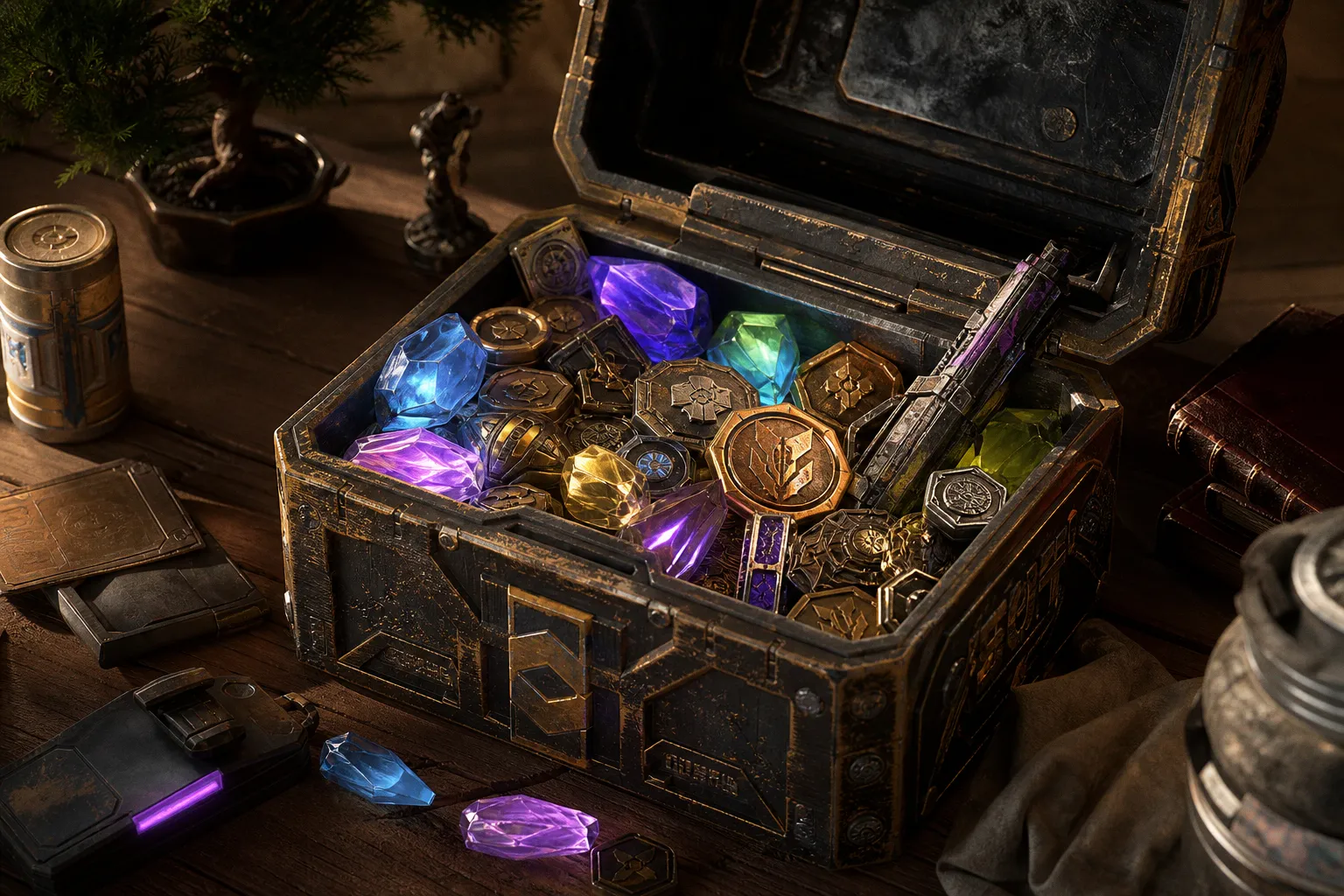
Off The Grid is a free-to-play cyberpunk battle royale built on the Avalanche network through a subnet called GUNZ. The match structure is familiar: drop in, loot, survive, extract. The twist is that the loot comes out of containers called HEXes, and the contents are cosmetic NFT weapon skins and gear tradeable on the GUNZ marketplace using the $GUN token. The "extraction" in the gameplay loop mirrors the extraction in the financial loop — what you carry out is what you can list.
Cost of entry: zero. You can play an entire weekend without connecting a wallet, and the matches hold up as a shooter on their own merits before the marketplace layer is even a consideration. That's the first reason this title ranks high for new players — the onboarding doesn't put a crypto pop-up in front of you, and the gunplay is the actual product.
What I can't give you is a reliable daily earnings figure. Skin prices move with demand, demand moves with the meta, and the marketplace is still being stood up alongside the GUNZ subnet rollout, so liquidity on any given week is the kind of thing you'd want to check on the marketplace itself before you commit a session to it. Treat the value of the HEX rolls as real but volatile — closer to a lottery ticket than a paycheck.
The part that stands out to me after a few months of play is that the NFT layer does not interrupt the core loop. Matches are fast, the gunplay is solid, and the cosmetic pulls feel like a bonus rather than the entire game. A trader treating Off The Grid as a side hustle will be disappointed by the unpredictability of skin prices. A player who treats the marketplace as a weekend side effect of having fun will be just fine.
The free download gets you in the door, but the moment you start thinking in terms of prices per skin, you've stopped playing a shooter and started running a market stall.
Practical note before you queue up: have a GUNZ-compatible wallet ready before you extract your first rare pull, because listing speed matters in a thin market. Don't grade your session on whether a HEX dropped a five-figure skin — grade it on whether the match itself was worth the queue.
Pixels and the Ronin Economy: Farming for $PIXEL Rewards
Pixels runs on the Ronin Network, and the vibe is Stardew Valley cross-pollinated with a token sink. You plant crops, run quests, build relationships with other players, and earn $PIXEL tokens as a byproduct of actually playing. The catch lives right at the withdrawal step: to move $PIXEL off the platform and into a Ronin Wallet, you need an active VIP membership. Without it, the tokens accrue in-game and have limited utility on the open market.
Cost of entry is free to play, with a VIP subscription gating real withdrawal. That subscription tier changes the math on whether the farming time is worth measuring in dollars. I've played the social-farming loop enough to know the gameplay itself is solid — the crafting, the resource loop, the daily quests all feel like a cozy game you'd play on its own — but treating Pixels as a "free money" game without the VIP tier misunderstands how the tokenomics are arranged. The game is fun. The earn is real but gated.
Background that matters if you're stepping onto Ronin: the network suffered a major exploit in March 2022, with roughly $625 million drained, and Sky Mavis subsequently raised around $150 million to reimburse affected users. That history is part of why some players treat the chain with caution even now, and it's worth knowing before you park time in any Ronin-based title. Pixels is the largest game on Ronin on this list, which is part of why it earns its place — it's where the active user base makes $PIXEL liquidity most plausible.
The honest verdict after a few weeks of farming: Pixels is at its best when you treat it as a cozy title with a tradable side-product, not as a yield-bearing game. The grind is light enough that a casual player can spend an hour a day in it without burning out. The VIP gate is the design choice that tells you whether the developers are building a game first or a token sink first. Players who can commit to the tier will see real withdrawal; players who can't will see the on-paper number and the actual cashable number diverge.
Big Time: Mastering Hourglass Rarity for Token Generation
Big Time is a multiplayer action RPG that runs a tight time-gated economy around NFT collectibles called Hourglasses. There are ten rarity tiers in the lineup, climbing from Common all the way up to Unique, and the higher the tier you equip, the more $BIGTIME tokens you generate while clearing dungeons. Cracked Hourglasses — the lower-tier or damaged versions — can be dismantled for a token payout rather than equipped. The choice sits in front of you every session: equip for sustained gain, or dismantle for a quick flush.
Cost of entry: free to install, with the meaningful earnings sitting behind NFT Hourglass ownership. A Common Hourglass generates a small but workable trickle of $BIGTIME. A higher-tier Hourglass lifts the earn rate meaningfully. The shape of the system is the classic GameFi spend-to-earn curve — you can start at the bottom and grind slowly, or start higher and earn faster. I'd treat the bottom tier as fun-with-side-income rather than a serious earn.
The hands-on feel is that the dungeons are competent action RPG fare, and the Hourglass system is a clean way to translate time investment into a number you can see on a dashboard. Where Big Time is a bit more demanding than the others on this list is in the onboarding — the loop takes a session or two before the time-to-token mental model clicks. Once it does, the grind reads clearly and the dismantle-versus-equip choice becomes one of the more interesting tactical decisions in any Web3 game right now.
Practical note: scarcity on the higher tiers changes the math considerably. A player willing to buy a mid-tier Hourglass on the secondary market will see a different earn curve than a free-to-starter grinding their way up. Both are valid; they aren't the same game economically, and going in honest about which one you're playing is half the battle.
Gods Unchained: Tactical Card Battles and Forge Mechanics
Gods Unchained is a tactical trading card game on Immutable X, and it's the title I'd recommend first to anyone who came in through Hearthstone or Magic: The Gathering Arena. Matches are skill-tested, ranked play matters, and the Daily Play & Earn system converts ranked wins into $GODS tokens on a predictable schedule. The Forge adds the NFT layer: duplicate cards can be fused and minted as NFTs for sale on the marketplace. That's where the longer-term earning loop lives — the cards you mint are tradeable; $GODS is the everyday earn.
Cost of entry: free. The starter deck is functional, you can grind the ranked ladder from day one, and the Forge mechanic means your duplicates don't sit in your collection gathering dust — they become tradeable NFTs. The skill ceiling is real. Players who climb the ladder will earn more $GODS per session than players who treat it casually. That's not a flaw; it's the correct design for a TCG.
What makes Gods Unchained my pick for the most "honest" earn of the five is that the daily reward system pays out based on wins, the Forge pays out based on the card meta on the marketplace, and there is no VIP gate standing between a free player and the withdrawable part. Time, skill, and meta awareness are the inputs. Cash isn't required to participate.
If there's a downside, it's that the TCG market on Immutable X fluctuates with the same volatility as any NFT collection — a card worth fifty dollars this month may be worth fifteen next month if a new set shifts the meta. The grind time-to-earn on $GODS is fairly stable; the grind time-to-earn on Forge-minted NFTs is not.
Illuvium's Interoperable Ecosystem: Fuel Systems and Land Yields
Illuvium is the most ambitious title on this list and the one with the highest cost of entry. It now runs on Immutable zkEVM, after migrating from its earlier chain setup, and it's split across three games that share assets: Overworld (open-world creature capture), Arena (auto-battler PvP), and Zero (land management). The earning mechanics run on three rails: weekly $ILV leaderboards, including the Arena Ranked Gauntlet and the Overworld Bounty Hunt (around 200 ILV per weekly leaderboard), land yield in Zero paid in Fuel and ETH, and a Unified Fuel system priced at a fixed $0.01 per unit that keeps in-game spending decoupled from $ILV token volatility.
Cost of entry: the lowest tier is free-to-play through Arena and Overworld, where daily sessions can earn modest $ILV rewards. The higher tier is owning land in Zero, where Fuel generation and ETH payouts scale with the size and tier of the plot and with the volume of Fuel burned relative to the overall player base. Land was historically expensive at mint, and the secondary market — IlluviDEX — still prices it accordingly, with a 5% transaction fee on secondary trades. None of that is hidden, but it's not casual-entry money either.
The hands-on feel is that Overworld is the most game-like of the three and the one I'd recommend a free player start with — capture, explore, build a roster of creatures that you can take into Arena. Arena's auto-battler loop is fast and friendly to short sessions. Zero is where the yield logic lives, and it's also the part of the ecosystem that requires capital before it makes sense. The "interoperable" claim is real: your captured creatures move between Overworld and Arena, which means grinding in one game pays off in both. The $0.01 Unified Fuel rate is a deliberate stabilization — when $ILV moves, your gameplay cost doesn't.
For a new player the practical on-ramp is to start in Arena and Overworld for free, learn the creature economy, and only think about land if you have the appetite for the secondary-market entry. The earning ceiling on land is meaningful, but it requires capital and patience, and the Fuel-versus-player-base payout formula means your returns are partly relative — higher when fewer players are spending, lower when many are.
Worth Your Time? The Five Side by Side
Best entry point of the five is whichever one you'd be playing even if the tokenomics disappeared tomorrow — that's how you avoid getting stuck grinding something you don't enjoy.
Here's the snapshot I'd hand a friend who's asking which to try first:
| Game | Cost of entry | Earning lever | Skill gate | Best suited for |
|---|---|---|---|---|
| Off The Grid | Free to play | $GUN marketplace skin trades from HEXes | Medium (FPS aim and positioning) | Shooter fans who don't want to be sold anything |
| Pixels | Free to play; VIP needed to withdraw $PIXEL to Ronin | $PIXEL via farming, quests, resources | Low | Cozy-game players willing to commit a subscription for the cash-out step |
| Big Time | Free starter; NFT Hourglass scales earnings | $BIGTIME generation or dismantle of Cracked Hourglasses | Medium | Action RPG grinders with patience for the onboarding |
| Gods Unchained | Free; starter deck functional | $GODS Daily Play & Earn + Forge-minted NFT cards | High (TCG win rate) | Card strategy players who like skill-tested ladders |
| Illuvium | Free Overworld/Arena (modest yield); Zero land (high yield, expensive) | $ILV leaderboards, Fuel and ETH yield on land, Arena and Bounty Hunt rewards | Medium | Long-horizon players with capital; free tier still works as an entry |
Five games, five different reasons to play. Off The Grid for the shooter, Pixels for the cozy farming, Big Time for the action RPG loop, Gods Unchained for the card strategy, Illuvium for the AAA ambition and the land yield. All five are honest about cost to enter: three are free, two require real investment if you want the meaningful earn curves. None of them guarantee income — token prices swing, marketplace liquidity thins when the broader market thins, and the grind-to-earn ratio is always a moving target. Treat each one as a game first, with a token mechanic layered on top, and you won't get hurt by any honest bad week.
If I had to pick one to start this weekend, it's Gods Unchained. It's the only title on the list where your time-to-earn is fully decoupled from your wallet, where the win-rate-to-token relationship is transparent, and where the game itself is sharp enough that I'd grind the ladder without the NFT layer. The earning mechanic is layered on top of a TCG I'd happily play for free, which is exactly the test I'd apply to any play-to-earn title before committing real time.