Inside MENA's fast-growing gaming industry as Saudi Arabia’s Esports World Cup takes the world stage
USD 5.62bn is the hard number. EnterpriseAM reports that MENA’s games market reached that revenue level in 2024 and is projected to hit USD 6.94bn by 2027, as Saudi-backed esports infrastructure…
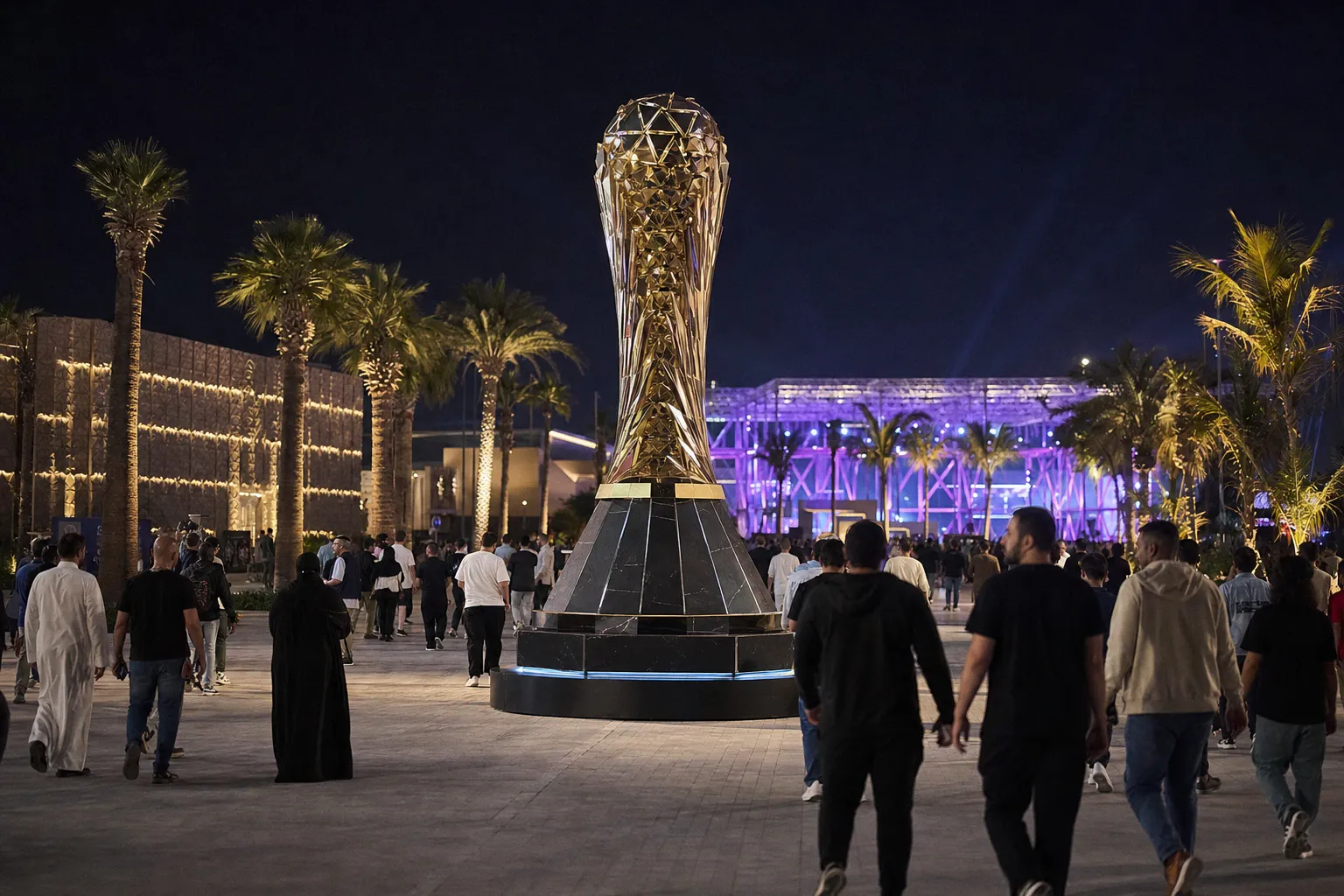
USD 5.62bn is the hard number. EnterpriseAM reports that MENA’s games market reached that revenue level in 2024 and is projected to hit USD 6.94bn by 2027, as Saudi-backed esports infrastructure moves onto a larger international stage with the Esports World Cup. For Web3 gaming teams, the signal is not “new region, new hype.” It is a stress test of distribution, live operations, and whether ownership mechanics can survive inside markets still driven by hardware, software, events, and brand money.
Saudi’s esports stack is being built as industrial policy
The Esports World Cup, according to EnterpriseAM, formally kicks off in Paris and runs through the end of August. The event is described as the creation of the Riyadh-based Esports Foundation, a global organization backed by Saudi Arabia’s Public Investment Fund.
That matters because this is not a small tournament operator looking for seasonal sponsorship. It sits inside a broader Saudi gaming strategy tied to Vision 2030. EnterpriseAM cites a target to establish 250 games companies in the Kingdom and create 39,000 new industry jobs by 2030.
The useful detail is the revenue architecture. Farah Tamer, senior director of strategy at the Esports Foundation, breaks the market into three streams: hardware, software, and “adjacencies.” Hardware means consoles, VR goggles, handhelds, controllers. Software covers paid games and free-to-play titles monetized through skins and in-game objects. Adjacencies include merchandise, television deals, brand partnerships, esports, and physical events.
For Web3 games, that is the checklist. If the pitch is only token distribution, it is structurally thin. If the design can plug into software revenue, item economies, creator commerce, or event-linked participation without adding custody friction and latency, then it has a surface area worth testing.
MENA growth is real, but it is not frictionless
EnterpriseAM cites Epyllion data from games analyst Matthew Ball showing annual video game and content sales in the MENA-3 — Egypt, Saudi Arabia, and the UAE — grew at a 9.9% CAGR from 2019 to 2025. The same source compares that with 1.4% CAGR for mature markets including the United States, Canada, Japan, South Korea, and parts of Western Europe.
That is the clean growth differential. It does not automatically validate every chain-based game entering the region.
The market is expanding from a consumer base into a production and investment base. EnterpriseAM quotes Tamer saying that five years ago a young Saudi wanting to work in games would likely have been dismissed by parents, while today it is encouraged. The cultural bottleneck is easing. The operational bottleneck remains.
Physical events are central to Saudi’s strategy, but EnterpriseAM also notes the risk: major games events have struggled globally. E3 shut down. Minecon moved online-only. Physical game retail has also been shrinking as downloads take over. Tamer refers to an “Esports winter” prompted by Covid-19.
That is a warning for any metaverse or play-to-earn team planning around spectacle first. Event traffic is bursty. Retention is not guaranteed. On-chain assets do not solve that. They add state, wallet, compliance, and support overhead. The region may offer demand growth, but the product still has to carry normal game-industry load.
The counterweight: Xbox shows what scale costs
The same week, KUOW reported a heavy reset at Microsoft’s gaming division. The report says Microsoft plans to reduce Xbox by 3,200 jobs over the next fiscal year, calling it “the most significant restructuring in Xbox history.” KUOW also reports Microsoft saying player numbers and playing hours are down.
The reasons cited are not niche. They are systemic: competition for user attention from social media and AI, high hardware costs, chip demand, tariffs, fuel prices, and weak margins. KUOW quotes technology research head Gil Luria saying divided user time reduces gaming spend. It also cites NYU professor Joost van Dreunen arguing that rising hardware prices tied to AI-driven chip demand are eating into Xbox’s margins.
This is the constraint map for Web3 gaming. MENA’s growth does not remove attention scarcity. Saudi-backed esports spending does not remove production cost. Item ownership does not remove weak retention. A tournament calendar does not remove the need for functioning game loops.
The practical read is narrow. Builders watching MENA should audit three things before treating the region as an expansion default: local distribution paths, non-token revenue compatibility, and infrastructure friction for wallets and in-game assets. If those are not solved, the market’s growth rate is just throughput the product cannot process.
Verdict: scalable opportunity, not scalable proof.